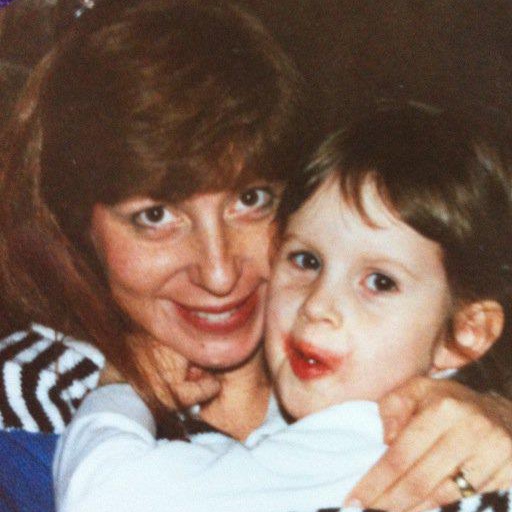
Parenting: Encouraging Uncool

In the early nineties I remember Saved By The Bell, Full House, New Kids on the Block, turtlenecks and the first desire of my heart to be cool. I was in early elementary school and this desire to be cool and fit in was as big as the boom box stereo my mother let me take on the bus to Jonathan Wright Elementary School.

The white turtlenecks, the Kmart matching sweatpant and sweatshirt sets, my clumsiness and natural given goofiness somehow, no matter how persistent I was to follow the boom box sized desire, in my early elementary years I never found myself being in with the in group.

What I wish I knew then is everyone is just trying to fit in. Everyone is working so hard to be liked. Everyone on the playground wants someone to know them and see them and after seasons of eventually finding myself at the cool table, I know the cool table is not all it is cracked up to be. I know a seat at the cool table is in fact an empty and unsatisfying goal when you find yourself there; especially when maybe you were never meant to be there in the first place.

What I know now is the people who I still have friendships with, friendships I find deeper than how are you doing, what are you doing and what kind of house do you live in are the friendships founded in seasons of uncool. The friendships which have permeated bad perms, braces and going out with the wrong guy are all friendships I initially formed when I was quite uncool. When my trying to be cool mask was off and I was my true nerdy, awkward and clumsy self. My truest friendships have been formed when I was not trying to work so hard to impress others but bare-boned, unashamed and free.

What I know now is I still struggle with the desire to fit in, be cool, to be well liked. I still carry this desire as big as boom box around with me in adulthood, the desire for someone to reach out and say, you are precious in my sight. The desire someone to say,  I see you as you are and you are loved as you are.

I have carried this desire around for so long it is easy for me to recognize it in others, similar to seeing a reflection of myself in a mirror.

So as I walk in this season with my own early elementary aged child, I see the desire of his heart to fit in. My heart breaks for him but at the same time, because this is my very own achilles heel I know how to sit with him in this season. I know how to identify with this very distorted desire to run with the self-proclaimed cool kids. I know how to talk with him about how friends are people who we can be our bare-boned and unashamed selves with. And I know how to kneel by his bedside with compassion and encourage him to be himself even at his uncoolest.

The true friends are the people who see us and love us even when we are in fact very uncool. True friends are the people who know we may still snort when we laugh and true friends are the ones who permeate bad perms and tough seasons.

I personally have become quite a fan of not fitting in. I have tried to squeeze myself into the mold but the mold of what is currently cool is not really my size.

I know God uniquely knits all of us together for his purpose and his glory. I want to raise children who embrace their white turtlenecked-God-given molds. He sees us and loves us completely, bare-boned and unashamed. And I want to encourage my children to  seek friends who see them as God sees them: precious in his sight, uniquely knit together, wonderfully made, even in the seasons of uncool.

To raise uncool kids who know they are deeply loved as they are, bare-boned, unashamed and free. This is how I use my boom-box sized desire to fit in, my story of drinking from the muddy, stagant and unsatisfying waters of acceptance and fitting in (Jeremiah 2:13) and seek to raise a new heritage of children secure in the Lord.

We are in fact precious in his sight. Bare-boned, unashamed and free. I want this truth to permeate the desire to be cool. I want to encourage true selves in stark contrast to what may currently and fleetingly be cool.

The Gospel Unravels Strength

“If we say, ‘I believe in Jesus,’ but it doesn’t affect the way we live, the answer is not that now we need to add hard work to our faith so much as that we haven’t truly understood or believed in Jesus at all.” Timothy Keller, The Prodigal God: Recovering the Heart of the Christian Faith

I had the opportunity a few years ago to experience what my denomination calls church planting assessment center. Imagine Hollywood Week on American Idol. Long hours of learning the ways God has woven together the unique patchwork of your heart, opportunities to share your testimony in front of your peers and moments of walking down a long aisle where three assessors sit at a table and tell you whether or not you are wired and ready to go and engage as a couple in the kingdom building work of planting new churches.

I walked into the week performing, prepared and properly attired. Church planting is simply starting new churches under the authority of a larger church in our denomination and church planting is statistically proven to be an effective way to share the hope of Jesus with the unchurched. My heart yearns for everyone to know and experience the hope I have in Jesus. I wanted church planting. I deeply desired for God to use me in a place where I felt comfortable enough to swim strongly, I wanted to reach people who were just like me.

Michael Craddock and I sat up front. Michael Craddock loves front row living. There were nine or so other couples in the room with us. Each of the couples is randomly assigned throughout the weekend a time to share both their testimonies and the husband preaches a brief sermon. My desire was to go first. I personally knew I could not sit there and marinate on what I had to say and wrestle with my “I am not enough” demons. Walking into the week I had such an impressive and well prepared speech, I am from total darkness so I believed my story was the kind of story that would certainly be a home run.

But in God’s good plan and perfect timing even with our front row living, Michael Craddock and I did not get the opportunity to stand up in front of the room first, Michael Craddock and I did not even get the chance to share the first night. In God’s good plan, I had to sit and I had to wait. I had to marinate. I had to listen the stories of others and wrestle with the self-pity threads of not being good enough I have woven around my heart. Wrestle with the fact that maybe my story was not that impressive at all. Wrestle with the fact that maybe God wasn’t calling me to what I believed to be was my filet mignon on the buffet line of ministry opportunities.

By the second day around lunch time I still had not had any opportunities to impress anyone. But I found myself sitting next to a pastor I had never met before at lunch, he was an assessor so I had my performance face on. He began to engage my heart and I very safely stayed at the surface. After fifteen years of discussing anything that had to do with the loss of my mother as a child I was very good at rotely responding to questions about my childhood. Beneath all my winding up tight and bootstrap pulling up this was what I had learned to do. But this man wouldn’t let me stay at the surface and I felt the threads from all my winding up tight begin to fray. I could feel hot tears in my eyes. Tears that were supposed to be hidden beneath my tough exterior.

In the waiting I then heard a sermon from 2 Corinthians 12. But he said to me, “My grace is sufficient for you, for my power is made perfect in weakness.” Therefore I will boast all the more gladly of my weaknesses, so that the power of Christ may rest upon me. For the sake of Christ, then, I am content with weaknesses, insults, hardships, persecutions, and calamities. For when I am weak, then I am strong. – 2 Corinthians 12:9-10.

And then the questioning, the unraveling, the wondering if I am defining strength by the ways of the world or by the ways of the gospel. God’s power was made perfect in weakness? God’s grace is enough? I can be content and even boast about my weak places because the power of God rests upon me? Weakness is strength?

As I sat there, tears still so close to the surface from lunch, I thought about these truths From 2 Corinthians. I thought about the gospel. I thought about living a life of pulling up bootstraps and covering up weaknesses and hardships since that graying day in March in the Chrysler Town and Country Minivan on Sycamore Creek Drive. I thought of the years I had spent as a Christian covering up weaknesses with scripture to appear impressive and pulled together. Using scripture as a tool to protect instead of a tool to transform.

In God’s perfect timing, we were called up for our turn almost directly after this sermon from 2 Corinthians 12. Right as I was sitting there in my head planning to rewrite all of the things I wanted to say. Hot tears so close to the surface. All my prepared words written out of a worldly view strength, performing well and impressing others now unraveled in pieces around me. I listened to Michael share and when my turn came some words came out that I knew and had rehearsed and then some other words I wasn’t even planning on saying at all. Something about feeling a deep burden and need for planting churches to bring the hope of Jesus and but then tears.

I began to cry. In front of a room of my peers and a long table of assessors I broke out into a hot mess of embarrassment level tears. The next words I said through sobs went something like, “I want to plant a church but I think maybe I haven’t been a Christian for long enough to be a good church planting wife. I just don’t know all the church songs.”

In all my preparedness and pulling up bootstraps I stood in front of that room and ending up sobbing about not knowing all the church songs. It was like my clenched jaw, the gatekeeper of all of those tears opened wide and every single tear I had bottled up for fifteen years began to flow. The words of my pastor friend and the words from 2 Corinthians were like a branch that just gently touched the surface of my frozen pond and I cracked open completely.

This was the beginning of the gospel unraveling my ideas about strength. My learned behaviors of gate keeping tears and hiding behind walls and verses. This is when I began to see I have so much unraveling to do beneath the surface when it comes to processing what strength looks like in Jesus. I have so many personal requirements for how I believe I should live as a wife, mother and Christian. So many expectations that aren’t grounded in what God requires of me at all. All God requires is that when I am weak, His power is perfectly displayed. As as I bravely walk in vulnerability, owning brokenness and rejoicing over healing tears I am slowly unraveling what I how I used to define strength to how God defines strength.

I am learning that following Jesus isn’t about being good enough, living a moral life or how well we can clean ourselves up on the outside. The gospel turns that all upside down and inside out. Following Jesus is about how broken we are and how willing we are to let Jesus shine through the broken places. There are many instances where I am still the insecure, guarded girl in the front seat of the Chrysler Town and Country Minivan. God isn’t completely finished with me yet, but he is working on me every so slowly. Philippians says, and I am sure of this, that He who began a good work in you will bring it to completion at the day of Christ. (Philippians 1:6).

God never did call us to church planting. In God’s good and perfect plan God has continued to make me wrestle in waters in which I feel uncomfortable and not quite strong enough to swim. Just a year and a half after church planting assessment my husband was called to be the lead pastor in an already established church. A role in which I feel inadequate and unequipped for but now that I have unraveled in the gospel I know I can be content in my weaknesses because I am willing to let Christ shine through my broken places. I am enough because Jesus makes me enough.

“It would be nice and fairly nearly true, to say that ‘from that time forth, Eustace was a different boy.’ To be strictly accurate, he began to be a different boy. He had relapses. There were still many days when he could be very tiresome. But most of those I shall not notice. The cure had begun.”

C.S Lewis, The Voyage Of The Dawn Treader

Why We Can’t Stand Alone In Our Grief

I have many friends who have known me in my grief and many friends who have loved me in my grief. Friends who loved me when I was so guarded, I completely detached from the roots that make me uniquely Rachel. I have a great community of people who have shared my grief and entered into it and for this reason, when I was ready, I believe I was able to heal and find fullness once again.

Shalom. Wholeness. Fullness. Contentment, completeness, wholeness, well being and harmony.

I believe we can never stand alone in our grief. I have been there. When we stand alone in our grief, grief consumes us. Grief is all enveloping. Grief is like a heavy cloak that is so heavy you cannot remove it on your own.

Before belief in Jesus, The Gospel and The Bible, I believed in grieving behind closed doors. I believed in suffering in silence, giving safe answers to hard questions, holding back tears and flashing “I’m fine” half smiles. Before my understanding of a Jesus who wept and a God who gave His one and only Son to give His life as a ransom for many, I believed in a life of bootstrap pulling and suffering behind closed doors. I believed lies that told me I was alone in my suffering. I believed the lies that I was different and unworthy because of my grief. I believed the lie that it was wrong to be broken in front of a watching world. I felt shame. For a long time I felt there was something wrong with me because of the broken heart of grief I carried silently around within my chest.

Before a changed heart and a changed life in Christ I believed in half-sightedness. I covered that broken heart and the shame with mask, upon mask, upon mask. Masking hurt with pretend strength, worn out boots and a calloused heart that could never fully heal alone behind those closed doors. A heart that could never heal when it was threaded in lies and tangled up in masks.

And I believe, belief in Jesus has changed the way I view my grief. And overtime I see Christ, by His grace and through His church transforming me.

In Mark Chapter 8, Jesus heals the blind Man at Bethsaida. And they came to Bethsaida. And some people brought to him a blind man and begged him to touch him. And he took the blind man by the hand and led him out of the village, and when he had spit on his eyes and laid his hands on him, he asked him, “Do you see anything?” And he looked up and said, “I see people, but they look like trees, walking.” Then Jesus laid his hands on his eyes again; and he opened his eyes, his sight was restored, and he saw everything clearly.

I believe Jesus does not want us, as his people to be walking around behind masks upon masks on our hearts, living with half-sightedness. In the passage above, Jesus heals the man, but when he looks around all he can see are men that look like trees. The man’s whole sight isn’t restored. So Jesus, lays his hands on the man’s eyes again to restore him to whole-sightedness. Wholeness. Jesus doesn’t desire for us to be healed only half way, Jesus wants us to be whole.

Wholeness. Shalom. Peace, Complete restoration.

Charles Scriven (The Promise of Peace, 2009):

So when the prophet Ezekiel spoke words of hope to the exiled people of Israel, he used the word shalom–“peace.” He did this because in the Hebrew tongue, shalom was about food, safety, and freedom; it was about prosperity, well-being, self-respect for the whole community. All this is what people need and want when they feel anxious or think their lives are hanging by a thread. Ezekiel, therefore, thought of God’s promise-the Great Promise–as a “covenant of peace.” The partnership between God and Israel meant that someday the things that hurt would lose out to the things that heal and restore. Someday, God’s people would flourish and be fully alive. (p. 57)

When I think of the shame I had over my broken heart, the hiding, the half-sightedness. I think of how desperately I wanted to live with whole-sight. With wholeness. Shalom. I wanted to feel the truth that someday the things that hurt would lose out to the things that heal and restore. That someday, Someday, as God’s child I would flourish and be fully alive.

Tim Keller Generous Justice (2010)

It means complete reconciliation, a state of the fullest flourishing in every dimension–physical, emotional, social, and spiritual–because all relationships are right, perfect, and filled with joy. (p. 174)

Shalom. Wholeness. Whole sight.

I often think about the years I sat in my shame and grief alone, hidden behind those masks upon masks. When I first believed, I knew enough scripture to be able to walk in half-sightedness. I knew Jesus wanted me to find comfort in Him. I knew Jesus wanted me to rest in Him. “Come to me all who are burdened and heavy laden and I will give you rest.” I just didn’t know how to find wholeness alone. I needed others to come alongside me and share in my grief, cry tears with me and preach truth to me. Because with half-sightless and masks over my broken heart I could not see truth with full clarity. I could not see truth with half sight.

We need others to share in our grief so others can preach truth to us when we can’t see it for ourselves. Community draws us out of the lies we preach to ourselves in our grief. Community draws us out of the shadows of shame and into the light of Christ. 

So flee youthful passions and pursue righteousness, faith, love, and peace, along with those who call on the Lord from a pure heart. (2 Timothy 2:22) 

We cannot be pushed out of our youthful passions and the shadows of shame unless we are alongside others, calling us out of it and helping us pursue righteousness, faith, love and peace. Shame is too big. Shame is all consuming. And walking along in shame is a breeding ground for lies.

But you are a chosen race, a royal priesthood, a holy nation, a people for his own possession, that you may proclaim the excellencies of him who called you out of darkness into his marvelous light. (1 Peter 2:8-9)

We are drawn out of the darkness and the shadows of shame and into a people. A priesthood. A nation. We are drawn out of the darkness and into a community of others. A community of the marvelous light of Jesus where we can be seen and unashamed because we belong to Christ.

We cannot stand alone in our grief because we cannot bear the burdens of grief alone. 

In a recent sermon I heard in church from the series “A Community That Cares” I learned that God cares for us here on earth by giving us a community of leaders.

Moses’ father-in-law said to him, “The thing that you are doing is not good. “You will surely wear out, both yourself and these people who are with you, for the task is too heavy for you; you cannot do it alone. (Exodus 18:17-18)

Heart work is hard work and being alone in your grief is not good. You will surely wear out, the task is much too heavy to bear alone. We cannot be alone in our grief, we need leaders, leaders in our Bible studies, Sunday Schools, churches and community groups. We can’t do the heart work of removing masks from our hearts alone. It is hard work.

When Moses’ hands grew tired, they took a stone and put it under him and he sat on it. Aaron and Hur held his hands up–one on one side, one on the other–so that his hands remained steady till sunset.

We need friends at our sides, holding up our hands when we can’t hold them up ourselves. We are human and God provides friends to be alongside to do the heavy lifting when we can’t bear the load.

Bear one another’s burdens, and so fulfill the law of Christ. (Galatians 6:2)

Jesus is the ultimate burden-bearer. We are called to bear one another’s burden which also means we must step out from behind the masks and the shadows of shame and allow others to bear our burdens as well.

The way I think about grief, my pain and the loss of my mother has changed little by little, thread by thread. It is a process of putting off old patterns and walking in new ones.

put off your old self, which belongs to your former manner of life and is corrupt through deceitful desires,  and to be renewed in the spirit of your minds, and to put on the new self, created after the likeness of God in true righteousness and holiness. (Ephesians 4:22-24)

And thread by thread as I unravel untruths from truths I feel God restoring me to whole-sightedness. I feel God bringing me out of the shadows of shame and out from behind the masks upon masks upon masks, into His marvelous light.

Little by little and thread by thread as I unravel, I feel shalom-peace: complete reconciliation, a state of the fullest flourishing in every dimension–physical, emotional, social, and spiritual–because all relationships are right, perfect, and filled with joy.

If we say, ‘I believe in Jesus,’ but it doesn’t affect the way we live, the answer is not that now we need to add hard work to our faith so much as that we haven’t truly understood or believed in Jesus at all.” Timothy Keller, The Prodigal God: Recovering the Heart of the Christian Faith

When The Memories Change

Sometimes it takes almost two decades for the memories to change from gray and back to color once again. Sometimes it takes years to walk through stages of grief and dig out from the walls you didn’t even know were callousing your heart.

Sometimes it takes years upon years to dig through the sadness to find that there was love and happiness underneath all of the grief. To remember there was once joy and smiles before the pain.

But the memories do change overtime.

At first I couldn’t even think about you. Recalling your laugh was a reminder of a life without hearing it ever again, the wounds of grief still freshly open, so I filed the memory of that laugh far away. So far I couldn’t remember it at all, so far I forgot about it for a time.

Later, when I thought I was ready to revisit your laugh, I pulled that memory out again. Only this time I didn’t feel the intense pain of that fresh wound, I felt sad. Tears came and that memory became a gray place for me to go when I thought of you. Your laugh which once brought me joy was now causing me tears. Every memory I pulled out of my time with you brought sadness. Every joyful moment we shared together brought tears. For a season I couldn’t even think of you without being sad or hear a story about you without crying hot heavy tears.

Then there was anger. How when I entered the season of marriage and having my own children, the anger came about how your laugh would never be heard or shared with them. Your presence and unconditional love through parenting four newborns in four years was deeply missed and I was actually quite pissed at you for not being her to help me hold and rock all the babies I could barely fit in my lap. And the anger that you missed tickling and laughing with my kids, blowing on their bellies or pretend gnawing on their chubby neck rolls. Anger. Hot red anger. The laugh that once brought me joy then, then it cause hot red, burning anger, festering with frustration about how this is just not the way it was supposed to be for us.

And then over time. On the other side of pushing memories away, the graying of them, the hot red frustration about them, the memories finally changed. Underneath the pain, the sadness and anger, once I dug out from underneath all of it I remembered the joy and the love.

I remembered your laugh and I wanted to talk with people about it. And the fullness of color, the clarity of sound, the way you smelled of Lancome’s Tresor. It all came back. The memories changed back when I was well enough to be thankful for the memories I was able to share with you. The tears still came but the tears were different.

And it is the joy that I know you want me to pass on to my family and others. Not the pain, the sadness or the anger. But the joy of your laugh. Your smile despite the battle you were fighting. The joy you showed me even when I knew you were angry too about the times you would miss with us. The stories that others share about you, now that I can hear them in full color I can see that you lived a life of joy in the midst of uncertainty and struggle. That what ties all the stories others share about you is your smile and your laugh.

When the memories change it is much easier to whisper your name to my kids over a bedtime story or hear them say your name in their prayers. It’s easier to tell them where I learned a group hug called a hunga-bunga, why I drive too close to the steer wheel, why we put red hots on Christmas cookies or even one day when they are old enough to tell them where they got that gene to use that curse word, the one you loved so much, at the drop of a hat.

When the memories change, it takes time, decades, seasons and stages but the memories do change back to reflect love. The sadness is still there but the sadness is quite different when it is seen through the lens of love. When the memories change on days like today, I can think of your laugh and be thankful for the times I was able to hear it up close and in person.


The Winding Up Tight

While the threads of my story do begin at birth just like every one else’s, the threads of this particular story do not begin at the very beginning at all. The threads of this story begin several years later with a girl in the front passenger seat of a Silver Chrysler Town and Country minivan and my father in the driver’s seat behind the steering wheel. We pulled out of our drive on that rainy gray March morning in the Midwest, the kind of morning where you can feel the change of sunshine and blue skies right around the corner, but the grayness of winter is still hanging on. It was raining as the minivan accelerated to twenty-five miles per hour on the short-less-than-a-minute ride down the mostly-straight, slightly-slopping down on the way out to the main road and slightly up on the way home Sycamore Creek Drive, a road though now I only visit once a twice a year I could possibly drive with my eyes closed. I don’t remember where my father and I were driving that day. I know we were sloping down and heading out somewhere. My memory was as cloudy as that overcast day and I can’t recall which way the van turned on that main road. At fourteen on a morning in March I could have been going to the dance studio (my second home), a friend’s house, I could have been late to school or maybe my father was driving me to visit my mother in the intensive care unit in the hospital downtown.

I remember that less than minute drive like it actually lasted a lifetime. Or maybe the memory has been stretched out and hung onto, revisited so many times it now feels like a stretched out knit sweater which was left on a metal hanger to dry in the laundry room. The moment by means of minutes and seconds was short but the memory, the pieces my brain has tucked and filed away feel like they have traveled around the world, through time and back again, stretching and weaving into my story across years, seasons, places and stages.

I am the kind of person who cringes at the notion that someone may reach out and touch my shoulder or give me a friendly hug. Physical intimacy has always been difficult for me. I would gladly and firmly shake your hand and flash you a smile but for as long as I remember that is about as chummy as I can get, left up to my own self. So I imagine this memory, this story defining moment as feeling cold. Two people in a car, I in my personal space on my side and my father respecting my personal space behind the driver’s seat the feeling of so much more space than that between us. That day was incredibly gray both the weather and the words that were about to be birthed out of my father’s mouth. I know he labored over those words. Carefully thinking about how to deliver them to me. The last seven years for our family had been less than Leave it to Beaver with my mom being diagnosed with breast cancer in 1991 and as the oldest child in the family I felt the emotional weight of what was going on. I knew what he was about to tell me. I had felt the weight of what he was about to tell me and carried the anticipation of those words around with me like a heavy cloak.

On the exterior I am a tough girl. It is my nature to pull up bootstraps, march on, hold it all together for everyone else. My deep desire is to appear strong. Appear solid. So with the expectation of my father’s delivery of these words I emotionally prepared myself. I made sure my gaze was fixed opposite of him. I knew if I looked in his eyes I would cry. My firm foundation built upon all the human strength I could muster up was brittle and shallow like a thin sheet of ice on a neighborhood pond. The simple resting of a branch upon its waters could cause the surface to crack, exposing what lies underneath. So I layered invisible walls between us in the front of that Silver Chrysler Town and Country minivan. I turned my gaze out the window on that gray day in March. I focused on the blurring line where the slopping curb meets the grass on Sycamore Creek Drive. The lines which when riding at twenty-five miles per hour it is difficult to tell where the sloped curb becomes grass and vice versa. My inner monologue chanting ugliness, don’t you be weak Rachel, you better not cry. I stared out the window, my father drove, he labored, he delivered.

“Rach, you know- mom is going to die.”

I didn’t have to look at him to know he was choked up behind the steering wheel on the Chrysler Town and Country minivan on Sycamore Creek Drive. I could feel his tears through the invisible walls I had built between us and as I tried to focus on that blurred line where the curb met the grass on that gray day in March. Those lines went from a straight streaking blur to a jumbled up swirl of gray-green as my vision became impaired by the tears I was trying so hard to keep myself from crying. There were hot tears in my eyes that I couldn’t stop from coming. I gritted my teeth as if my jaw was the gatekeeper of those tears. Being broken for me was the very worst possible thing I believed I could do for my father in that moment. The news that he had labored over went in one ear at out the other. I wanted to be numb to it.

“I know,” I grumbled in hard-core teenager-like fashion.

When my gritting teeth helped me choke back those tears, my gaze turned up from where the curb meets the grass on Sycamore Creek Drive and I saw my reflection in the window, then my father’s reflection and finally I felt the weight of disappointment on my chest. I had screwed it all up. Even with all my wall building. If I could see my reflection in the window, my father could see it too. He knew I was crying. He knew I was hurting. In that moment I believed I had failed at accepting what was happening. In my fourteen-year-old brain I had already reasoned that I had no time for anger, or sadness and forget grief counseling. This was my first test and I failed. When I have recalled the long drawn out threads of this moment, stretched over times and seasons, I honestly can’t reconcile which I am more upset about: the news of my mother’s coming death or the fact that I felt deep shame over being sad about it.

So in that seat on Sycamore Creek Drive I committed to winding up my threads a little bit more tightly. I committed to building greater walls. The more I covered up, the less I would be seen. The less I would be found out for a sad girl unaccepting of her future to live her life without the glue of everything she knew. So I committed to hiding beneath a tough exterior at fourteen the best I knew how. I committed to a life of bootstrap pulling and winding up tight. A committed to a life without anyone ever knowing the real me.

But thankfully I see this moment as the beginning of the story. The beginning is the winding up tight and the rest of the story in the chapters that follow is the loosening of those threads. The unraveling of them. Where overtime, season by season threads are loosed from what I believed was true about strength and brokenness and walking in what God says is true about strength and brokenness.

“It would be nice and fairly nearly true, to say that ‘from that time forth, Eustace was a different boy.’ To be strictly accurate, he began to be a different boy. He had relapses. There were still many days when he could be very tiresome. But most of those I shall not notice. The cure had begun.”
― C.S. Lewis, The Voyage of the Dawn Treader